
Does Flooring Thickness Really Matter? Density vs. Thickness Explained

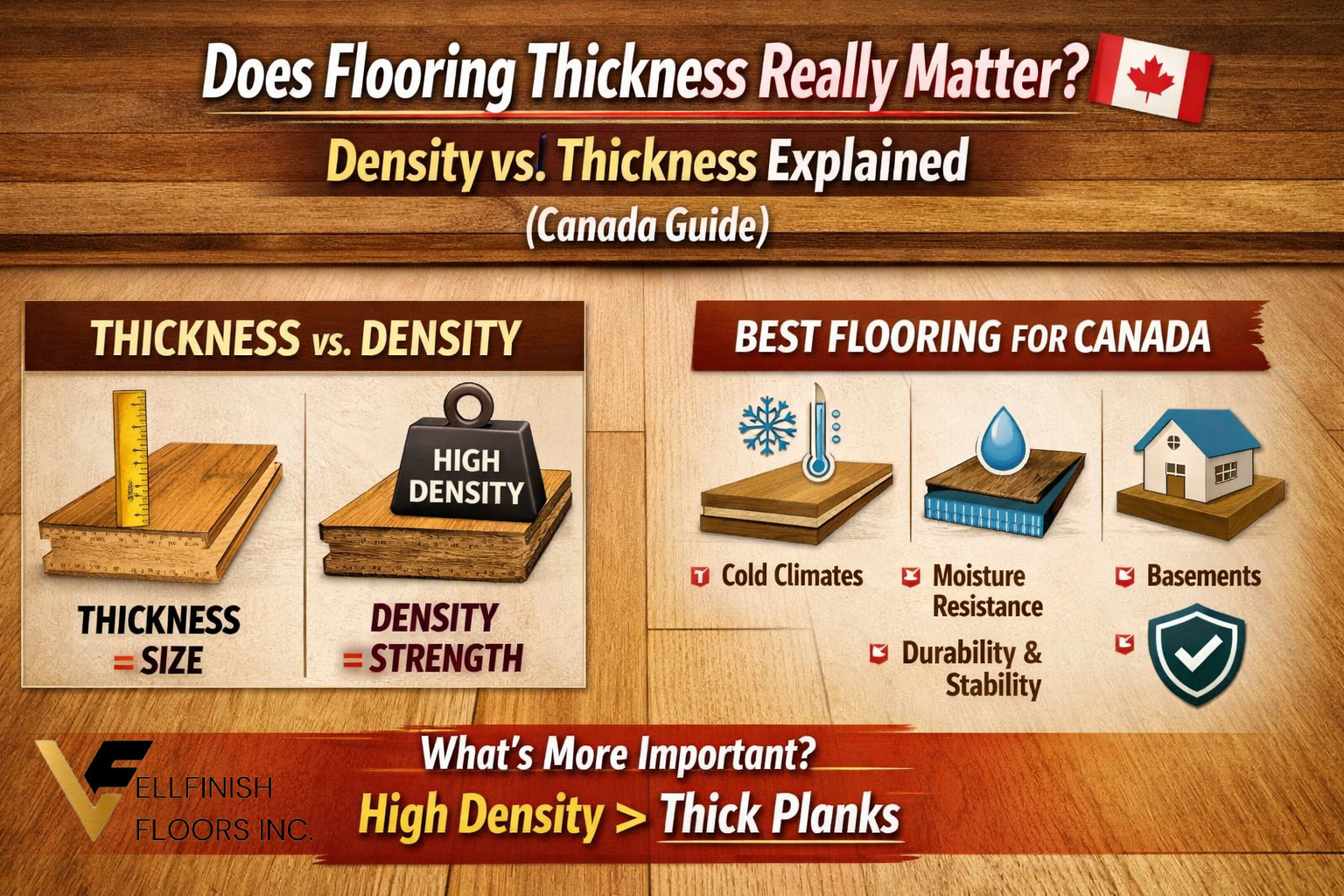
When choosing new flooring for your home or business, one of the most common questions is: Does flooring thickness really matter? Many homeowners in Canada assume that thicker flooring automatically means better quality. However, the reality is more nuanced. Understanding the difference between flooring thickness and flooring density can help you make a smarter, longer-lasting investment.
In this detailed guide, we’ll break down everything you need to know about engineered hardwood thickness, laminate flooring thickness, vinyl plank thickness, and how density vs. thickness impacts durability, comfort, and performance—especially in Canadian climates.
Understanding Flooring Thickness
Flooring thickness refers to the total measurement from the top surface to the bottom layer of the flooring material. It is usually measured in millimeters (mm) for products like laminate flooring, vinyl flooring, and engineered hardwood flooring.
Common Flooring Thickness Levels in Canada:
- Laminate flooring: 6mm to 12mm
- Vinyl plank flooring (LVP): 4mm to 8mm
- Engineered hardwood flooring: 10mm to 20mm
Why Thickness Matters
Thickness plays a role in:
- Comfort underfoot
- Sound insulation
- Resistance to minor subfloor imperfections
- Durability (to some extent)
However, thickness alone does not determine quality—and this is where many Canadian homeowners get confused.
What is Flooring Density?
Flooring density refers to how tightly packed the core material of the flooring is. It is especially important for:
- Laminate flooring (HDF core)
- Vinyl flooring (rigid core or SPC)
- Engineered wood flooring (plywood or hardwood core)
Why Density is Crucial
High-density flooring:
- Is more impact-resistant
- Handles heavy furniture and foot traffic better
- Offers improved moisture resistance
- Lasts longer in Canadian weather conditions
👉 In simple terms:
Thickness = Size
Density = Strength
Density vs. Thickness: What Matters More?
This is the key question for buyers in Canada.
1. Durability
- High-density flooring performs better than thicker but low-density flooring.
- Example: An 8mm high-density laminate can outperform a 12mm low-density laminate.
2. Moisture Resistance
Canadian climates include humidity, snow, and temperature swings.
- Dense cores resist swelling and warping better than thicker, less compact materials.
3. Stability
- Dense flooring expands and contracts less with temperature changes.
- Important for homes in cities like Toronto, Brampton, Vancouver, and Calgary.
4. Sound Absorption
- Thicker flooring reduces noise.
- But density also plays a role in sound dampening.
👉 Best choice: A balance of moderate thickness + high density
Flooring Types: Thickness vs. Density Comparison
1. Laminate Flooring
Thickness Range: 6mm–12mm
Core Type: High-Density Fiberboard (HDF)
What to Look For:
- Minimum 8mm thickness for residential use
- High-density HDF core
Key Insight:
A dense 8mm laminate is often better than a cheap 12mm option.
Best for Canada:
- Cold climates
- Budget-friendly homes
- Moderate foot traffic areas
2. Vinyl Plank Flooring (LVP / SPC)
Thickness Range: 4mm–8mm
Core Type: SPC (Stone Plastic Composite) or WPC
What Matters More:
- Wear layer thickness (top coating)
- Core density (SPC is denser than WPC)
Key Insight:
- A 5mm SPC vinyl plank with high density is stronger than a thicker low-quality vinyl.
Best for Canada:
- Basements
- Kitchens
- Moisture-prone areas
3. Engineered Hardwood Flooring
Thickness Range: 10mm–20mm
Top Layer (Wear Layer): 2mm–6mm
Important Factors:
- Thickness of real wood veneer
- Core stability
Key Insight:
- A thicker wear layer matters more than overall thickness.
- Allows refinishing and longer lifespan.
Best for Canada:
- Living rooms
- High-end homes
- Areas with temperature fluctuations
Canadian Climate Impact on Flooring Choice
Canada’s climate plays a major role in flooring performance.
Winter Conditions
- Dry indoor air can cause expansion/contraction.
- Dense flooring handles this better.
Summer Humidity
- Moisture can lead to swelling.
- High-density cores resist damage.
Basements in Canada
- Prone to moisture
- Require dense, waterproof flooring like SPC vinyl
👉 Conclusion: In Canada, density is often more important than thickness due to climate challenges.
Common Myths About Flooring Thickness
Myth 1: Thicker Flooring is Always Better
❌ False
✔️ Density and quality matter more
Myth 2: Thin Flooring is Cheap Quality
❌ Not always
✔️ High-density thin flooring can outperform thick low-density options
Myth 3: Thickness Determines Lifespan
❌ Incorrect
✔️ Wear layer + density determine longevity
When Thickness Actually Matters
While density is critical, thickness still plays a role in certain situations:
1. Uneven Subfloors
- Thicker flooring can hide minor imperfections.
2. Noise Reduction
- Thicker planks reduce echo and sound transmission.
3. Comfort
- Feels more solid underfoot.
4. Installation Type
- Click-lock systems benefit from thicker boards.
Ideal Flooring Thickness by Room (Canada Guide)
Living Room
- 8mm–12mm laminate or 12mm+ engineered hardwood
- Focus on density and comfort
Kitchen
- 5mm–7mm SPC vinyl
- Water resistance is key
Basement
- 4mm–6mm SPC vinyl
- Density over thickness
Bedroom
- 7mm–10mm laminate
- Comfort + sound reduction
Commercial Spaces
- High-density flooring required
- Thickness secondary
Flooring Thickness vs Wear Layer
Another critical factor often confused with thickness is the wear layer.
What is Wear Layer?
- The top protective coating on flooring
Importance:
- Protects against scratches, stains, and wear
Ideal Wear Layer Thickness:
- Vinyl flooring: 12 mil – 20 mil
- Engineered hardwood: 3mm+ veneer
👉 A thick wear layer + high density = maximum durability
Cost vs Value: Thickness vs Density
In Canada, pricing often increases with thickness—but that doesn’t always mean better value.
Smart Buying Tips:
- Don’t overpay for thickness alone
- Check core density specifications
- Choose trusted brands and suppliers
- Consider long-term durability over short-term savings
Installation Considerations
Thicker Flooring:
- Easier to install on uneven surfaces
- Better for floating installations
Dense Flooring:
- Requires proper subfloor preparation
- More stable over time
👉 Always hire professional installers for best results, especially in Canadian homes where climate impacts performance.
Eco-Friendly Flooring Considerations
Density also affects sustainability:
- High-density materials last longer → less replacement
- Better for reducing environmental impact
Look for:
- Low VOC emissions
- Certified eco-friendly materials
Expert Recommendation for Canada
If you’re choosing flooring in Canada, here’s the ideal approach:
✔️ Prioritize high-density core materials
✔️ Choose moderate thickness (8mm–12mm)
✔️ Check wear layer quality
✔️ Consider room type and moisture exposure
Conclusion
Choosing the right flooring is about more than just picking the thickest option. By understanding density vs. thickness, you can make a smarter investment that lasts longer, performs better, and handles Canada’s demanding climate conditions.
Whether you’re installing laminate flooring in Brampton, vinyl flooring in Toronto, or engineered hardwood across Canada, always focus on quality over size.