

SPC vs LVP Flooring: Differences, Benefits and Buying Tips

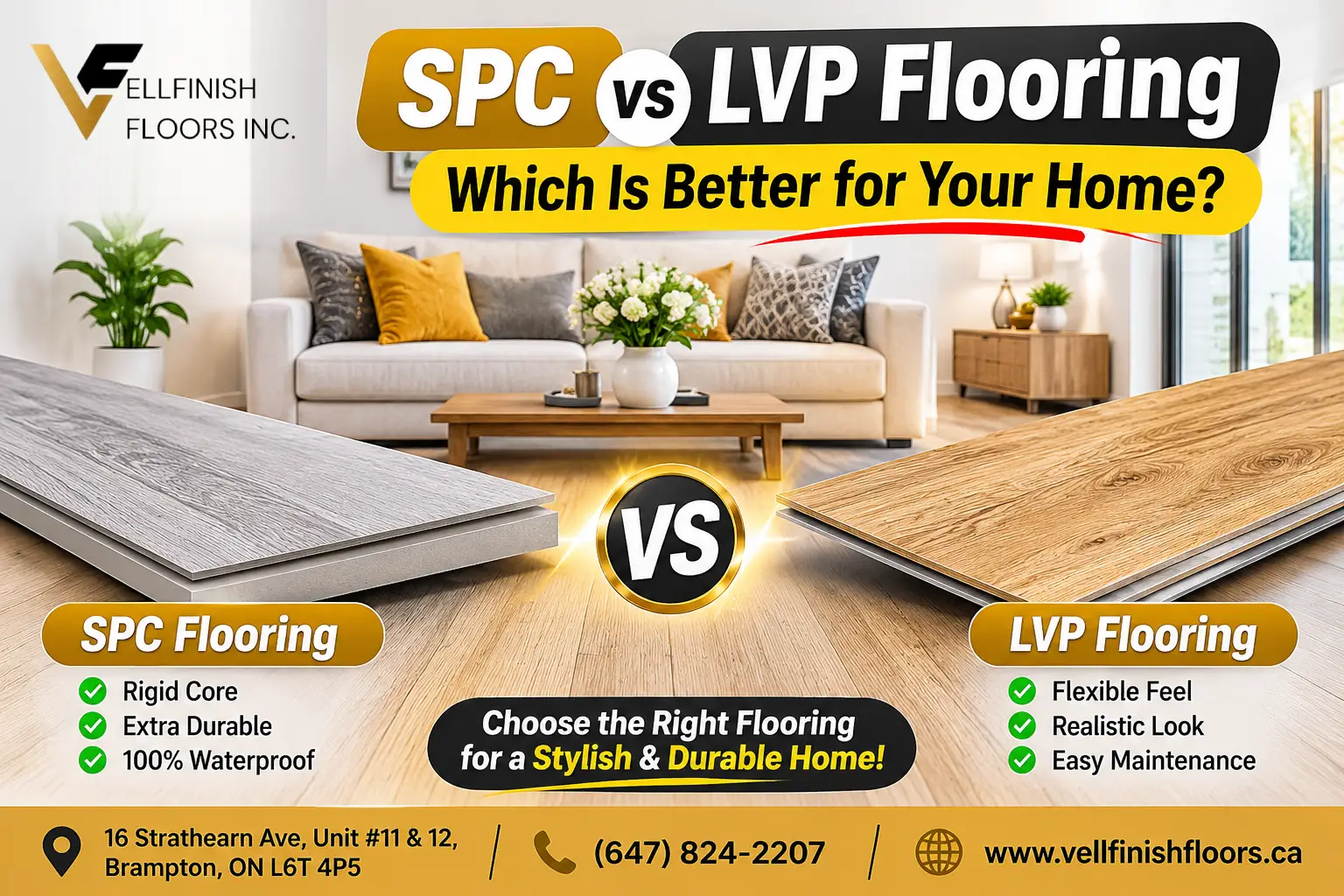
Choosing the right flooring can make a big difference in your home’s appearance, comfort, and long-term value. Among today’s popular vinyl flooring options, SPC and LVP flooring are two choices that homeowners often compare. Both offer attractive designs, easy maintenance, and excellent durability, but they have some important differences.
If you are planning a flooring renovation, understanding SPC vs LVP flooring can help you select the best option for your lifestyle, budget, and installation requirements.
At Vellfinish Floors, we help homeowners find quality flooring solutions that combine style, performance, and value. Whether you are renovating a single room or upgrading your entire property, understanding these flooring types will make your buying decision easier.
What Is SPC Flooring?
SPC stands for Stone Plastic Composite or Stone Polymer Composite. It is a type of rigid-core vinyl flooring made using a combination of limestone powder, stabilizers, and other materials. This creates a dense and strong core that provides excellent stability.
SPC flooring is especially popular in kitchens, basements, bathrooms, and other areas where moisture resistance is important.
Benefits of SPC Flooring
- Excellent durability: Its rigid core helps resist everyday wear and impact.
- Waterproof construction: SPC flooring is designed to handle spills and moisture when properly installed.
- Dimensional stability: It is less likely to expand or contract with temperature changes than many traditional flooring products.
- Stylish designs: Available in realistic wood, stone, and contemporary patterns.
- Easy maintenance: Regular sweeping and damp mopping help keep it clean.
- Suitable for busy areas: Its strong construction makes it a practical choice for active households.
SPC flooring is an excellent option for homeowners looking for a durable, low-maintenance flooring solution.
What Is LVP Flooring?
LVP stands for Luxury Vinyl Plank. It is a vinyl flooring product designed to replicate the appearance of natural hardwood flooring. LVP comes in plank-shaped pieces with realistic wood grain patterns, colours, and textures.
Traditional LVP products often have a more flexible construction than SPC flooring, although some modern LVP products also feature rigid cores.
LVP is popular because it offers the beauty of hardwood without many of the maintenance requirements associated with natural wood.
Benefits of LVP Flooring
- Realistic wood appearance: Creates the look of hardwood at a more accessible price.
- Comfortable underfoot: Flexible LVP products can feel softer when walking on them.
- Moisture resistance: Many LVP products offer excellent protection against everyday spills.
- Wide design selection: Available in different wood tones, plank sizes, and finishes.
- Easy cleaning: Requires minimal maintenance compared with natural hardwood.
- Versatile installation: Depending on the product, installation may use click-lock, glue-down, or loose-lay methods.
LVP flooring is a great choice for homeowners who want attractive flooring with practical everyday performance.
SPC vs LVP Flooring: What Are the Main Differences?
Although both products belong to the luxury vinyl flooring category, their construction, feel, and performance can differ.
1. Core Construction
The biggest difference is the core material. SPC flooring uses a rigid composite core containing limestone-based material, while traditional LVP generally uses a more flexible vinyl-based construction.
This difference affects how each product feels and performs.
2. Durability
SPC flooring has a dense rigid core that provides excellent resistance to impacts and everyday pressure. LVP flooring is also durable, but its performance depends on the product’s construction and wear layer.
For high-traffic areas, compare the wear layer thickness and manufacturer’s specifications before purchasing.
3. Comfort and Feel
Traditional LVP can feel softer and more flexible underfoot. SPC flooring is generally firmer because of its rigid core.
If comfort is your main priority, compare samples in person before making your final choice.
4. Waterproof Performance
Both SPC and many LVP products are designed to resist water. However, waterproof flooring does not automatically mean the entire floor installation is waterproof.
Water can still reach the subfloor through gaps, edges, or improper installation. Always follow the manufacturer’s installation instructions.
5. Temperature and Stability
SPC flooring generally offers better dimensional stability because of its rigid core. It can be a suitable choice for rooms where temperature fluctuations occur.
LVP performance varies depending on the product type, installation method, and manufacturer’s recommendations.
6. Installation
SPC flooring commonly uses a click-lock floating installation system. LVP may be available in click-lock, glue-down, and other installation formats.
The best installation method depends on your subfloor condition, room layout, and selected product.
SPC vs LVP Flooring Comparison Table
| Feature | SPC Flooring | Traditional LVP Flooring |
|---|---|---|
| Core | Rigid composite | Flexible vinyl |
| Durability | Excellent | Good to excellent |
| Feel | Firm and solid | Softer and flexible |
| Water resistance | Excellent | Excellent in suitable products |
| Stability | High | Depends on construction |
| Appearance | Wood and stone designs | Mainly realistic wood designs |
| Installation | Often click-lock | Click-lock, glue-down or loose-lay |
| Maintenance | Easy | Easy |
Important: Product specifications vary between manufacturers. Always compare individual flooring products rather than relying only on the category name.
Which Flooring Is Better for Different Areas of Your Home?
The best flooring depends on where you plan to install it.
SPC Flooring for Kitchens
Kitchens experience regular foot traffic, food spills, and occasional moisture. SPC flooring is a practical choice because of its rigid construction and water-resistant design.
SPC Flooring for Basements
Basements can experience changing humidity levels. SPC flooring can be a suitable option, provided the concrete subfloor is properly tested and prepared before installation.
LVP Flooring for Living Rooms
Traditional LVP offers beautiful wood-look designs that work well in living rooms. Its comfortable feel and wide range of styles make it an attractive flooring option.
LVP Flooring for Bedrooms
If you want a softer feel underfoot and the appearance of hardwood, LVP can be worth considering for bedrooms.
SPC and LVP for Commercial Spaces
Both products can be used in suitable commercial environments. However, check the wear layer, warranty, installation requirements, and commercial-use rating before selecting a product.
Buying Tips: How to Choose the Right SPC or LVP Flooring
Before purchasing new flooring, consider these important factors.
1. Check the Wear Layer
The wear layer protects the printed design from everyday scratches and surface wear. Compare the thickness and product specifications to find an option suitable for your household.
2. Select the Right Thickness
Flooring thickness affects the overall construction and feel of the product. Remember that total plank thickness and wear layer thickness are two different measurements.
3. Choose a Suitable Colour
Light oak, grey, natural wood, and dark brown finishes can create different interior styles. Select a colour that complements your walls, furniture, and lighting.
4. Inspect the Subfloor
A clean, dry, and level subfloor is important for a successful installation. Uneven surfaces can cause problems with click-lock flooring.
5. Compare Warranties
Review residential and commercial warranties, water-related limitations, and installation conditions before making a purchase.
6. Order Samples
Viewing flooring samples in your actual room can help you understand how the colour and texture look under natural and artificial lighting.
7. Consider Your Budget
Compare the flooring price, underlay requirements, accessories, installation costs, and long-term maintenance needs rather than focusing only on the price per square foot.
Why Choose Vellfinish Floors in Brampton?
Finding the right flooring becomes easier when you have access to different styles and product options. Vellfinish Floors offers flooring solutions for homeowners, contractors, and renovation projects.
Visit our flooring store in Brampton to explore options for your home or commercial space.
Our flooring selection includes:
- Luxury vinyl plank flooring
- SPC and rigid-core vinyl flooring
- Engineered hardwood flooring
- Waterproof laminate flooring
- Hardwood flooring
- Stairs and railings
Whether you prefer the rigid construction of SPC or the flexible feel of traditional LVP, our team can help you compare suitable flooring options.
Explore our flooring products and collections to find styles that match your renovation plans.
You can also explore our luxury vinyl flooring options in Brampton and discover flooring designs that combine attractive appearance with everyday practicality.
Final Thoughts: SPC vs LVP Flooring – Which One Should You Buy?
When comparing SPC vs LVP flooring, both options offer excellent benefits. SPC is a strong choice if you prefer a rigid core, stability, and a firm feel underfoot. Traditional LVP is worth considering if you want a more flexible flooring product with attractive hardwood-inspired designs.
The right choice depends on your room, budget, installation conditions, and personal preferences.
Before making your final decision, compare product samples, wear layers, warranties, and installation requirements.
Visit Vellfinish Floors in Brampton to explore quality SPC, LVP, and other flooring options for your next renovation project.
Vellfinish Floors
16 Strathearn Ave, Unit #11 & 12, Brampton, ON L6T 4P5, Canada
Phone: (647) 824-2207
Email: info@vellfinishfloors.ca
Website: https://vellfinishfloors.ca/
Frequently Asked Questions (FAQs)
1. Is SPC flooring better than LVP flooring?
SPC flooring offers a rigid core and excellent dimensional stability. Traditional LVP can provide a softer and more flexible feel. The better option depends on your requirements.
2. Is SPC flooring waterproof?
SPC flooring planks are generally waterproof, but the complete flooring installation is not necessarily waterproof. Proper installation and moisture management are important.
3. Is LVP flooring good for homes with pets?
Yes. Many LVP products have durable wear layers and are suitable for homes with pets. Choose a product with appropriate scratch and wear resistance.
4. Which is more comfortable, SPC or LVP?
Traditional flexible LVP generally feels softer underfoot, while SPC flooring feels firmer because of its rigid core.
5. Can SPC flooring be installed in basements?
Yes, many SPC products are suitable for basement installations. However, the concrete subfloor must be properly tested, prepared, and installed according to manufacturer guidelines.
6. How do I maintain SPC and LVP flooring?
Sweep or vacuum regularly and clean with a damp mop and a manufacturer-approved cleaner. Avoid harsh chemicals and excessive standing water.
7. Where can I buy SPC and LVP flooring in Brampton?
You can visit Vellfinish Floors at 16 Strathearn Ave, Unit #11 & 12, Brampton, Ontario, to explore flooring options and get help choosing the right product for your space.