
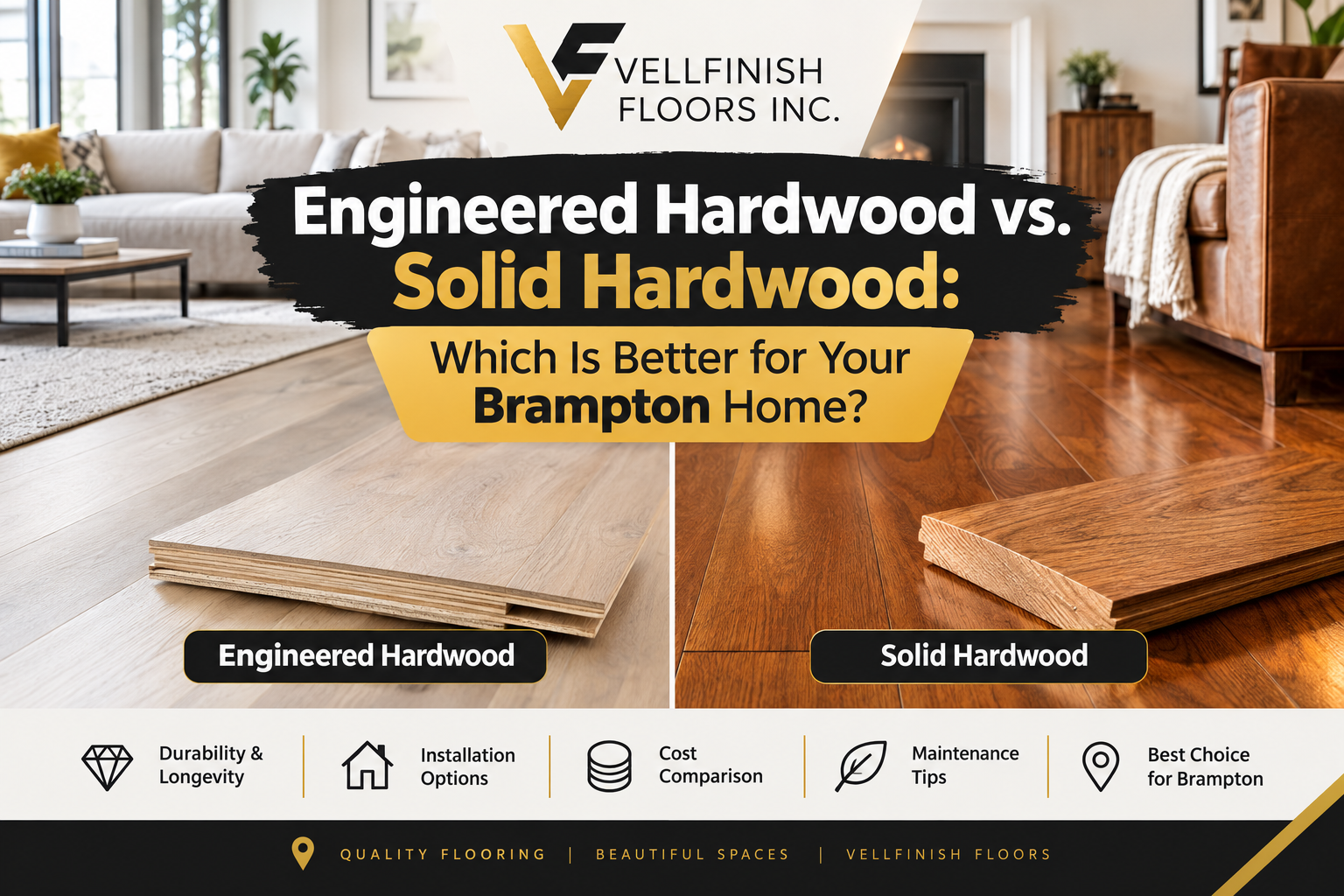
Engineered Hardwood vs. Solid Hardwood: Which Is Better for Your Brampton Home?

Choosing the right flooring can make a big difference to the appearance, comfort, and long-term value of your home. If you are planning a renovation, two popular options to consider are engineered hardwood and solid hardwood flooring. Both offer the natural beauty of real wood, but they differ in construction, moisture resistance, installation requirements, maintenance, and refinishing potential.
For homeowners searching for engineered hardwood Brampton, understanding these differences can help you select flooring that suits your home, lifestyle, and budget.
At Vellfinish Floors, homeowners can explore flooring options for different interior styles and renovation projects. Whether you prefer the traditional appeal of solid hardwood flooring or the flexibility of engineered wood, the right choice depends on where and how you plan to install it.
1. What Is Engineered Hardwood Flooring?
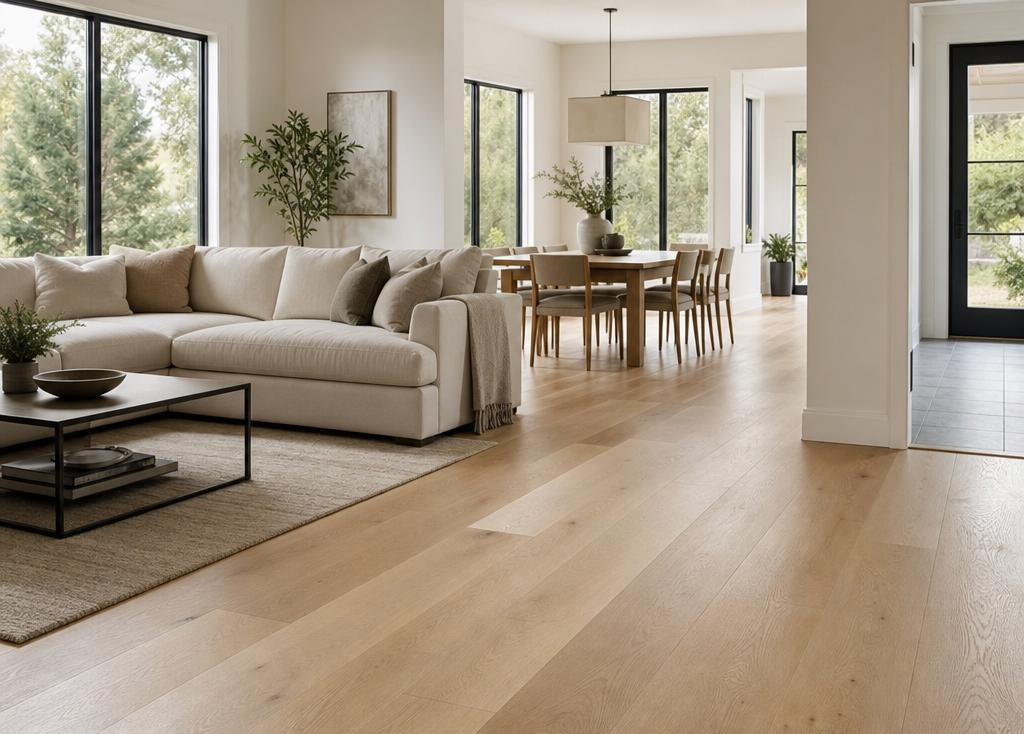
Engineered hardwood flooring is made with a real hardwood surface layer attached to a core consisting of multiple layers of wood-based material. Depending on the product, the core may contain plywood, high-density fibreboard, or other engineered materials.
The top layer provides the natural grain, colour, and texture of hardwood. Because the supporting layers are arranged to improve dimensional stability, engineered hardwood generally handles seasonal humidity changes better than solid wood.
This can make it a practical choice for many homes in Brampton, where indoor humidity changes between heating season and warmer months.
Benefits of engineered hardwood
-
Natural wood appearance: Enjoy the grain and character of genuine hardwood.
-
Improved dimensional stability: Layered construction helps reduce movement caused by humidity changes.
-
Flexible installation options: Certain products can be nailed, glued, or floated, depending on the manufacturer’s instructions.
-
Suitable for more installation environments: Some products are approved for concrete subfloors and below-grade spaces.
-
Wide plank designs: Engineered hardwood is available in contemporary wide-plank styles.
-
Different colours and finishes: Options can complement modern, traditional, and transitional interiors.
However, engineered hardwood is not waterproof. Spills should be cleaned promptly, and the product’s suitability for a specific room must always be confirmed.
Explore the available engineered hardwood flooring options at Vellfinish Floors.
2. What Is Solid Hardwood Flooring?

Solid hardwood flooring is manufactured from a single piece of natural wood. Popular choices include oak, maple, walnut, and hickory. Each species has its own grain pattern, colour variations, and physical characteristics.
Many homeowners prefer solid hardwood because of its traditional construction and long service life. When properly installed and maintained, it can remain attractive for decades.
Another important advantage is its refinishing potential. Solid hardwood can generally be sanded and refinished multiple times, provided enough usable wood remains above the tongue of the plank.
Benefits of solid hardwood flooring
-
Authentic wood construction: Each plank consists of solid natural wood.
-
Long-term durability: Quality flooring can last for decades with proper care.
-
Multiple refinishing opportunities: Many solid hardwood products can be renewed several times.
-
Timeless appearance: Natural wood works well in both classic and modern homes.
-
Repair potential: Depending on the damage and installation, individual boards may be replaceable.
Solid hardwood also has limitations. It expands and contracts with humidity changes and is generally unsuitable for below-grade basement installations. It is usually installed over an appropriate wood subfloor using an approved installation method.
For additional information, visit the Vellfinish Floors website to explore flooring options for your renovation.
3. Engineered Hardwood vs. Solid Hardwood: Key Differences
Understanding the main differences will make it easier to choose the right flooring for your Brampton property.
| Feature | Engineered Hardwood | Solid Hardwood Flooring |
|---|---|---|
| Construction | Real wood surface with a layered core | Single piece of natural wood |
| Appearance | Natural hardwood grain | Natural hardwood grain |
| Humidity stability | Generally more stable | More sensitive to humidity changes |
| Concrete subfloors | Many products are suitable | Generally not recommended |
| Basement installation | Possible with an approved product and suitable conditions | Generally unsuitable below grade |
| Installation | Nail, glue, or float, depending on product | Usually nailed or stapled to a suitable wood subfloor |
| Refinishing | Depends on the thickness of the real wood layer | Generally supports multiple refinishing cycles |
| Wide plank options | Available in many styles | Available, but movement requires consideration |
| Initial cost | Varies by product and quality | Varies by wood species and quality |
| Best suited for | Flexible installation requirements | Traditional above-grade installations |
Neither option is automatically better for every home. The subfloor, room location, product specifications, and long-term maintenance plans should guide your decision.
4. Which Flooring Is Better for Brampton’s Climate?
Brampton experiences seasonal temperature and humidity changes. These conditions can affect natural wood flooring, particularly when indoor humidity is not properly controlled.
During winter, indoor heating can make the air dry, causing wood to shrink. In humid weather, wood can absorb moisture and expand.
Engineered hardwood is designed to reduce dimensional movement through its layered construction. This can make it a useful choice for homeowners who want real wood flooring with greater stability under changing indoor conditions.
Solid hardwood can also perform well in Brampton homes when it is installed correctly and maintained in an appropriate indoor environment.
Before installation, consider these steps:
-
Check the moisture content of the subfloor.
-
Follow the manufacturer’s acclimation requirements.
-
Maintain indoor humidity within the recommended range.
-
Leave the required expansion gaps.
-
Use the correct installation method for your flooring product.
These precautions are important for both engineered hardwood and solid hardwood flooring.
5. Which Is Better for Basements and Concrete Floors?

If you are renovating a basement or installing flooring over concrete, engineered hardwood is often the more practical choice.
Solid hardwood is generally not recommended for below-grade spaces because moisture conditions can cause excessive expansion, warping, or other damage.
Some engineered hardwood products are approved for basement installations and concrete subfloors. However, the concrete must be properly assessed and prepared, and any required moisture barrier or adhesive system must follow the manufacturer’s specifications.
If you are considering engineered hardwood for a basement, check:
-
Whether the flooring is approved for below-grade use.
-
The moisture condition of the concrete slab.
-
The manufacturer’s installation and warranty requirements.
-
Whether the selected product is compatible with the proposed underlay or adhesive.
Remember that engineered hardwood is moisture-resistant by construction compared with many solid wood products, but it is not waterproof. Areas with persistent dampness or standing water may require a different flooring material.
6. Which Hardwood Flooring Is More Durable?
Both types can provide excellent durability, but the final result depends on the wood species, surface finish, product quality, installation, and maintenance.
Solid hardwood is particularly appealing to homeowners who want flooring that can be refinished repeatedly over its lifetime. Scratches and surface wear can sometimes be addressed through professional sanding and refinishing.
Engineered hardwood can also be durable. Its performance depends on the quality of the construction and the thickness of its real wood wear layer. Some engineered floors can be refinished, while others allow only limited sanding or none at all.
When comparing products, ask about:
-
The thickness of the real wood wear layer.
-
The finish and scratch resistance.
-
The warranty coverage.
-
The recommended cleaning products.
-
The permitted number of refinishing cycles.
Homes with children, pets, and busy hallways may benefit from a durable finish and a wood species suited to everyday traffic. Neither engineered nor solid hardwood is completely scratch-proof.
7. Engineered Hardwood vs. Solid Hardwood: Which Costs Less?
The cost of hardwood flooring depends on several factors, so it is best to compare actual products rather than assume one category is always cheaper.
Engineered hardwood is available across a broad price range. Standard products may have a lower initial price than some solid hardwood options, while premium engineered floors with thick wear layers and high-quality finishes can cost more.
Solid hardwood pricing depends on the wood species, grade, plank dimensions, finish, and availability.
Your total project budget should also include:
-
Flooring materials.
-
Subfloor preparation.
-
Underlay, adhesive, or fasteners.
-
Installation labour.
-
Removal and disposal of old flooring.
-
Transitions, trims, and finishing materials.
-
Additional moisture-control requirements, where applicable.
For an accurate estimate, measure the installation area and compare the full project cost for both options. This will help you avoid choosing a product based on material price alone.
8. Which Option Looks Better in Modern Homes?
Both engineered hardwood and solid hardwood can create an attractive, natural finish. The visible surface is genuine wood in both cases, so the appearance depends more on the wood species, grade, colour, texture, and finish than on the construction type alone.
Popular styles for contemporary homes include:
-
Natural white oak for a light, open appearance.
-
Warm brown hardwood for traditional interiors.
-
Wide-plank flooring for a spacious, modern look.
-
Matte finishes for a more understated appearance.
-
Natural wood tones that coordinate with neutral walls and furniture.
Engineered hardwood is often available in wide-plank formats that provide greater dimensional stability than comparable solid boards. Solid hardwood remains an excellent choice for homeowners who appreciate traditional wood construction and future refinishing options.
If appearance is your main priority, compare physical samples under your home’s lighting before making a final decision.
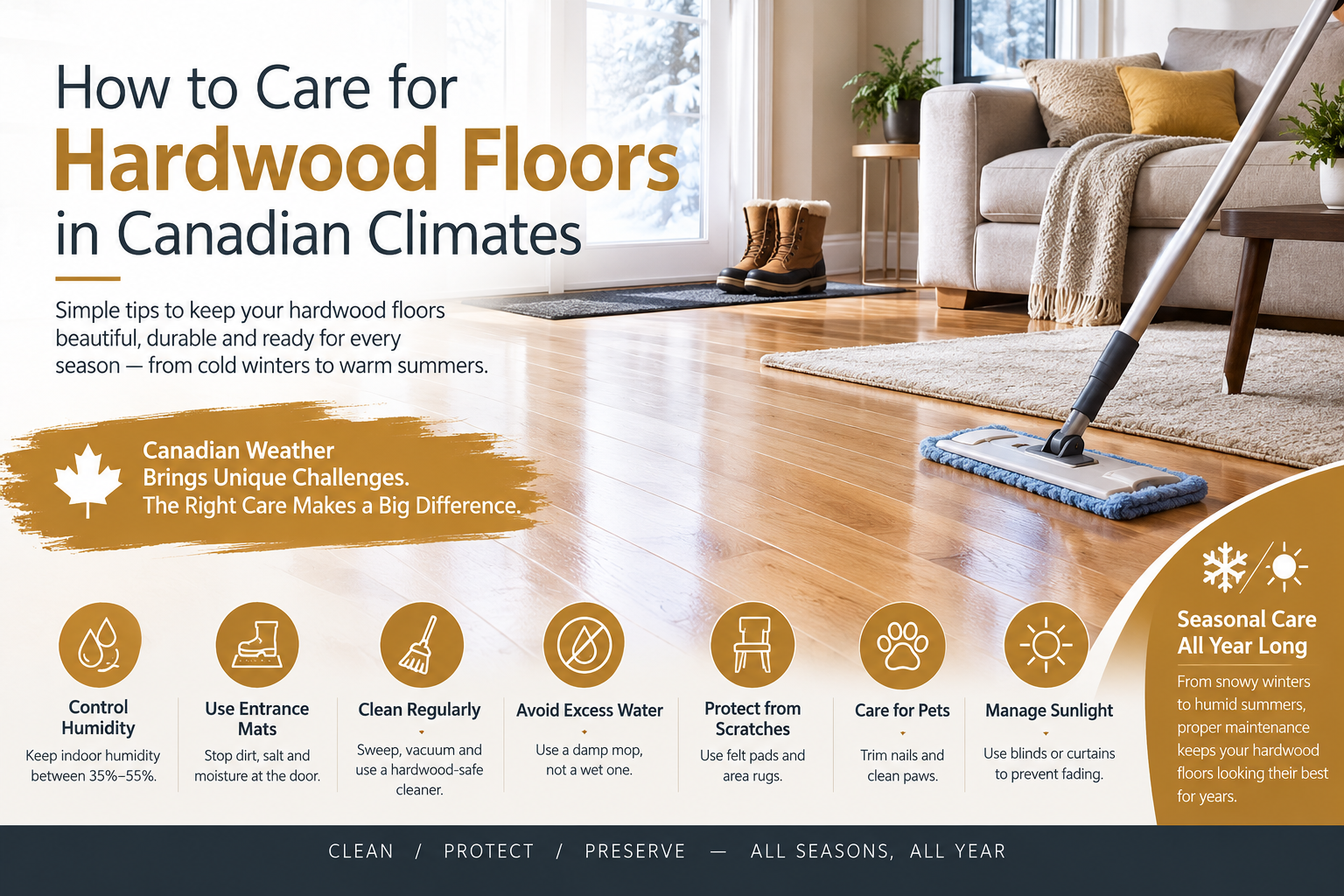
9. How to Maintain Hardwood Floors
Proper maintenance helps protect your flooring investment, regardless of which type you select.
Follow these simple tips:
-
Sweep or vacuum regularly using a suitable floor attachment.
-
Clean spills promptly with a soft cloth.
-
Use cleaning products recommended by the flooring manufacturer.
-
Place protective pads under furniture legs.
-
Use entry mats to reduce dirt and grit.
-
Avoid excessive water when cleaning wood floors.
-
Maintain indoor humidity within the recommended range.
-
Arrange professional repairs or refinishing when required.
Avoid steam cleaning unless the manufacturer specifically permits it. Excess moisture and unsuitable cleaning products can damage wood flooring and its finish.
10. Why Choose Vellfinish Floors for Hardwood Flooring in Brampton?
Choosing the right product is easier when you can compare flooring styles and understand their practical differences.
Vellfinish Floors serves homeowners looking for flooring options in Brampton and the surrounding Greater Toronto Area. Whether you are renovating a single room or planning a larger home improvement project, comparing different flooring products can help you find a suitable match.
You can explore engineered hardwood flooring and review additional guidance in the Hardwood Flooring Brampton Homeowners Guide.
When selecting your flooring, consider the following:
-
Your preferred wood species and colour.
-
The installation area’s moisture conditions.
-
Your existing subfloor.
-
Your budget and long-term maintenance plans.
-
Whether you want a floor that can be refinished in the future.
The aim is to select flooring that looks good, suits your home, and performs well under the conditions in which it will be installed.
Frequently Asked Questions
1. Is engineered hardwood better than solid hardwood in Brampton?
Engineered hardwood may be a better choice where dimensional stability, concrete subfloors, or approved below-grade installation is important. Solid hardwood is often preferable for traditional above-grade installations where multiple future refinishing cycles are a priority.
2. Is engineered hardwood real wood?
Yes. Engineered hardwood has a genuine hardwood surface layer over a layered core. It is different from laminate flooring, which uses a decorative image rather than a real wood wear layer.
3. Can engineered hardwood be installed in a basement?
Some products can be installed in basements if the manufacturer approves below-grade use and the subfloor meets moisture and installation requirements. Always check the product specifications before purchasing.
4. Can solid hardwood flooring be refinished?
Yes. Solid hardwood can generally be sanded and refinished multiple times, depending on its thickness, condition, and previous sanding.
5. Can engineered hardwood be refinished?
Some engineered hardwood products can be refinished. The number of possible refinishing cycles depends on the thickness of the real wood wear layer and the manufacturer’s instructions.
6. Is engineered hardwood waterproof?
No. Engineered hardwood may offer better dimensional stability than solid hardwood, but it is not automatically waterproof. Prolonged exposure to moisture can damage the wood surface and core.
7. Which hardwood is best for a busy family home?
Both options can work well. Choose a suitable wood species, a durable factory finish, and a product appropriate for your subfloor and lifestyle. Use protective pads and clean spills promptly.
8. Where can I buy engineered hardwood in Brampton?
You can start by exploring the engineered hardwood collection at Vellfinish Floors and comparing available styles, product specifications, and installation requirements.
Conclusion: Engineered Hardwood or Solid Hardwood?
The best flooring depends on your home’s requirements rather than a single universal winner.
Choose engineered hardwood if you need greater dimensional stability, are working with a suitable concrete subfloor, or want a product approved for a particular installation environment.
Choose solid hardwood flooring if you prefer traditional solid-wood construction, have a suitable above-grade wood subfloor, and value the potential for repeated refinishing over the years.
Before making your decision, compare product quality, wear-layer thickness, installation requirements, maintenance, and total project cost.
If you are searching for engineered hardwood Brampton or comparing solid hardwood flooring for your next renovation, visit Vellfinish Floors to explore your options and find flooring that suits your space.
Vellfinish Floors
16 Strathearn Ave, Unit 11 & 12, Brampton, ON L6T 4P5
Phone: (647) 824-2207
Website: https://vellfinishfloors.ca